Introduction
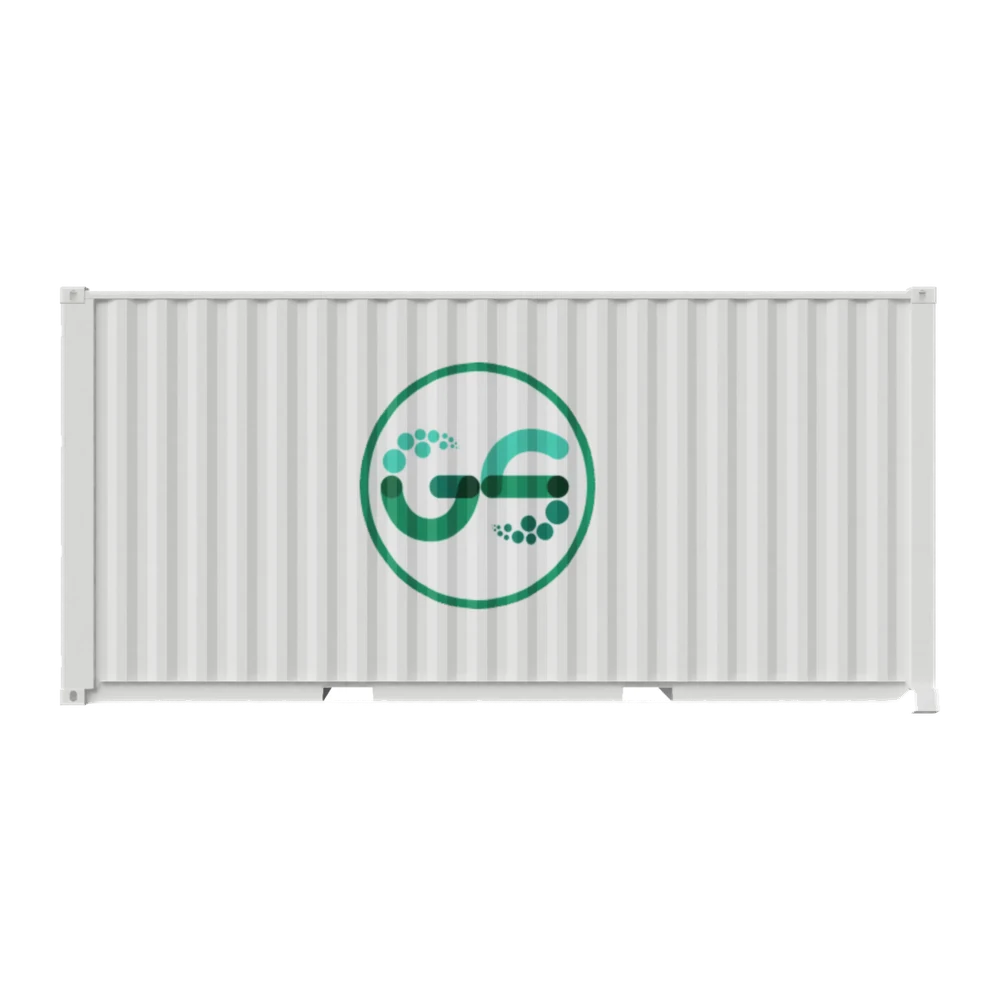
GAZ SYSTEMES offers its customers the possibility of carrying out the custom installation of medical fluid production plants in containers.
The containers are delivered "Plug & Play", meaning that all connections inside the container are made: whether electrical, pneumatic or related to ventilation.
GAZ SYSTEMES offers many options: the colour of the container, its insulation, its floor covering or even the installation of additional doors or windows.
1. Types of containers
Container size
The size of the container is mainly dictated by technical constraints related to the footprint of the equipment and to the respect of a minimum distance between the units in order to carry out maintenance operations.
The main types of containers used are the following; they all allow shipping by sea as standard:
- 20-foot DRY container
- 40-foot DRY container
- 20-foot HC (High-Cube) container
- 40-foot HC (High-Cube) container
High-Cube containers have the advantage of an interior height thirty centimetres greater than that of standard DRY containers. This gain of 30 cm makes it possible to integrate all GAZ SYSTEMES oxygen production plants into containers.
| Type | Int. length | Int. width | Int. height | Ext. length | Ext. width | Ext. height |
|---|---|---|---|---|---|---|
| 20 ft DRY | 5 898 mm | 2 350 mm | 2 390 mm | 6 058 mm | 2 438 mm | 2 591 mm |
| 40 ft DRY | 12 029 mm | 2 350 mm | 2 398 mm | 12 192 mm | 2 438 mm | 2 591 mm |
| 20 ft HC | 5 898 mm | 2 350 mm | 2 698 mm | 6 058 mm | 2 438 mm | 2 896 mm |
| 40 ft HC | 12 029 mm | 2 350 mm | 2 690 mm | 12 192 mm | 2 438 mm | 2 890 mm |
Other containers and prefabricated units
It is possible to ship these installations in containers or prefabricated units not approved for maritime transport, provided that shipment to the customer is by land or that the goods shipped are outside the maritime category.
Containers of 6, 8 and 10 feet and Algeco-type prefabricated units are particularly suitable for the smallest power plants.
2. Insulation of containers
The insulation of production containers is almost unavoidable, given the heat generated by the compressors (although a large part of this heat is extracted from the container) but also the local temperature and sunlight conditions.
If the container is placed under shelter and in a temperate climate, insulation will not be mandatory although strongly recommended. The GAZ SYSTEMES teams will advise you on the best technical solution to adopt while staying as close as possible to your budget. The standard insulation offered by GAZ SYSTEMES is made from sandwich panels up to 120 mm thick. The sandwich panels are composed of two sheets of galvanised steel 0,2 mm thick, between which is a layer of polyurethane-based insulation.
The panels are installed on all internal walls of the container: walls, ceiling and doors.
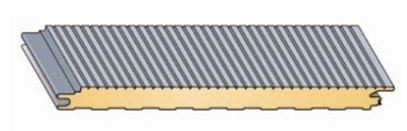
Cross-section view of a sandwich panel: the exterior part is galvanised and the interior part is lacquered white in the standard configuration.
3. Connection of production equipment
Pneumatic connection
The pneumatic link between the different components of an oxygen or medical fluid production plant is essential. Indeed, a pneumatic connection must be optimised to limit pressure losses, prevent the transmission of vibrations, avoid the formation of condensation in the pipes due to temperature gradients, and ensure safety against electrical accidents.
When GAZ SYSTEMES installs the containers, all these elements are taken into account:
- All fittings are made of high-quality stainless steel, degreased for contact with oxygen. Whatever the medical fluid, the installation in the container is made of stainless steel, whether for compressed air, vacuum, anaesthetic gas extraction or nitrous oxide.
- The pipes are supported by high-quality soundproof clamps, and are all electrically earthed.
- The pipework is optimised to avoid low points and, when they are unavoidable, they are equipped with a condensate drain.
4. Ventilation of containers
Particular care is taken in the design and installation of an adequate ventilation system. Indeed, for several reasons, it is essential to ventilate the container properly:
- The composition of the air in the container must remain similar to that of the outside in order to supply enough oxygen to the generator.
- The air temperature must be within the lower capacity limits of each piece of equipment.
To meet these conditions, the following elements are systematically implemented in GAZ SYSTEMES containers:
Channelling of gaseous waste outside the container
The production of oxygen by PSA technology produces nitrogen from the air as waste. It is essential to channel this nitrogen release outside the container and in directions opposite to the fresh air intakes.
GAZ SYSTEMES provides for each generator nitrogen extraction ducts intended to release the nitrogen directly outside the container at the bottom.
This evacuation of gaseous waste also applies in the case where the container is equipped with a suction plant as well as an anaesthetic gas evacuation plant.
Air extraction systems — hot air ducts
Lubricated screw compressors produce hot air due to the necessary cooling of the oil at the outlet of the compression block. This hot air must be discharged outside the container to maintain the correct temperature. This extraction can be carried out in two ways, either by a natural extraction duct or by an electric extraction duct.
This extraction also makes it possible to renew the air in the container.
Electric air extractors
In addition to the hot air extraction ducts of the compressors, GAZ SYSTEMES systematically installs wall-mounted air extractors allowing efficient artificial air circulation.
The capacity of the extractors depends on the configuration of the production plants, the minimum being the installation of an extractor with a minimum capacity of 2000 m³/h.
Ventilation grilles
Air extraction requires in return a renewal of fresh air in the container. This renewal is provided by ventilation grilles located on the walls and floor of the container.
The area occupied by these networks is generally equal to 0,15 m² per kW of installed power.